Setting a Table for Guests with Different Arrival Times
Setting a table for guests with different arrival times keeps early arrivals comfortable and gives latecomers a clear place to join without a full reset.
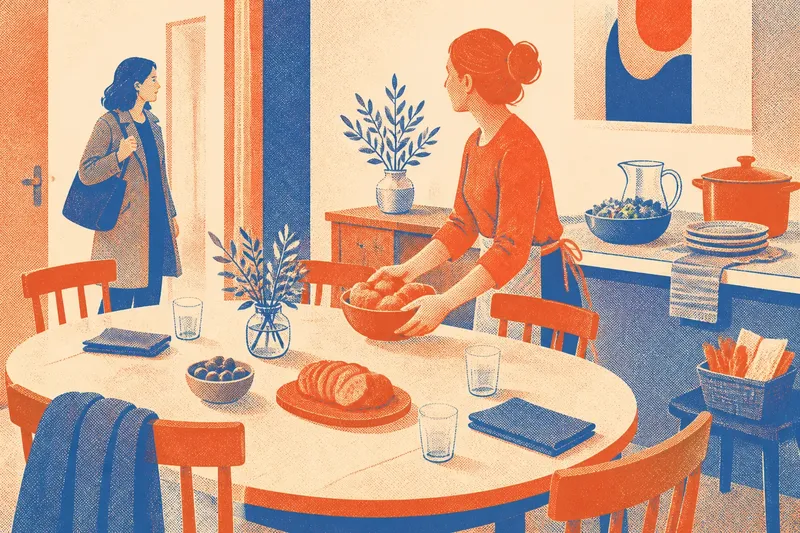
The common mistake when setting a table for guests with different arrival times is treating the first arrival as a cue to wait until everything is ready. It can leave people standing around while you arrange cutlery, and turn a relaxed welcome into a deadline. Set the table to work in stages instead: let early guests settle in, and leave the parts that depend on the meal until they are needed.
A table with a landing zone
Begin with the table’s most useful job: giving people somewhere to put a glass, a coat draped over a chair, or a bowl of olives. Lay out the chairs and any everyday items guests will need at once, such as water glasses and napkins. The table is now open for use even if the serving dishes are still in the kitchen.
Keep one area deliberately clear. A small side table, kitchen counter or end of the dining table can hold a jug, a snack and any serving pieces you are not ready to bring out. This landing zone stops the centre of the table becoming a storage space for things you are still sorting.
If the meal includes a hot dish, do not make the whole table depend on its arrival. Put out bread, a simple snack or a salad that can be served early, and keep the hot dish covered until the group is ready. The early guests can begin with what is available rather than watching you carry plates back and forth.
Leave the table ready for conversation before making it ready for ceremony.
Place settings in layers
Think of each place setting as a sequence rather than a finished display. The first layer is what a guest can use as soon as they sit down: a napkin, water glass and enough room to rest a plate. Add the dinner plate and cutlery when the meal is close, not simply because the first person has arrived.
This is especially helpful if you are serving food family-style. A full place setting can crowd the table before serving bowls arrive; a napkin and glass establish a place without taking up the space needed for the food. If guests will help themselves from a buffet or counter, keep cutlery together in a jug or basket nearby so people can take it when they serve themselves.
Make late arrivals easy to accommodate. Keep a spare napkin and a place setting within reach, but not on a chair that someone might assume is reserved. A folded napkin on a sideboard is enough to signal that you can add a place without making a production of it.
For an invented example, say you expect one friend before the rest and are serving soup with bread. You set out water glasses and napkins, put bread and a small dish of olives on the table, and leave the soup bowls stacked on the counter. The first guest can sit and nibble; when the others arrive, you bring the bowls and serve the soup without clearing away a decorative arrangement.
Serving as people arrive
Choose food that can wait comfortably, and keep the parts that cannot wait out of sight until the group is ready. A covered salad bowl, room-temperature tart or loaf of bread can sit on the sideboard while people gather. For dishes that need to stay hot or cold, follow the food’s handling instructions rather than leaving it on display for convenience.
Separate the welcome from the main meal. A jug of water and a modest snack give guests something to do without implying that dinner has started. If you prefer not to serve food before everyone is present, offer water or tea and let the table remain a place to sit, not a signal that the meal is under way.
Serving bowls can also arrive in a deliberate order. Put out shared items that are ready first, then bring the main dish when the latecomers have had time to settle. There is no need to reconstruct every place setting as each person walks in; add the missing plate and cutlery at the edge of the table while conversation continues.
Keep a tea towel or small tray nearby for carrying glasses and dishes. A simple staging spot gives you somewhere to set things down without interrupting the conversation or balancing them in your hands.
When should dinner begin?
Should early guests wait for everyone?
Not necessarily. If the food is ready and the group is comfortable, begin with a snack or first course, then bring out the main dish when it suits the gathering. A clear, friendly cue—such as offering bread or pouring tea—helps guests understand what is available.
How do I handle a late arrival?
Keep one place setting easy to add and leave room for a chair if the layout allows. When the person arrives, welcome them, bring over the plate and cutlery, and carry on with the conversation rather than apologising for the table.
What if the meal is already served?
Set aside a portion in the kitchen before serving, especially if the main dish is difficult to share once everyone has started. When the late guest arrives, offer the food without asking the whole table to pause or rearrange.
How can I avoid a crowded table?
Put only the items people need now on the table, and keep extra dishes on a counter or sideboard. Bring each serving bowl over when it is time to eat, then remove empty dishes when there is a natural pause.
Room for the conversation
A table that stays usable is not necessarily a table that looks finished from the first minute. A low vase or small bunch of flowers can add warmth, but keep it short enough that guests can see one another across the table. Candles are best placed where sleeves and serving dishes will not brush against them.
Think about movement as well as appearance. Leave a clear path between the door, the table and the place where drinks or food are waiting. If a guest arrives carrying a bag or helping with a dish, they should not have to squeeze past a chair or shift a stack of plates.
For a small table, make the centre movable. Put flowers on a sideboard at first, then bring them to the table once the food is served, or remove them if the serving bowls need the space. A table can change shape as the gathering changes; that is more useful than insisting on one arrangement all evening.
A light reset between arrivals
When someone new arrives, make only the adjustment that helps them join in. Add a chair, bring a glass, and move a bowl if the new place needs room. Avoid clearing the whole table merely to make it look as though the meal has not begun.
If guests are arriving over a long stretch, keep a small stack of clean plates and napkins together nearby. That way, you can make a place without opening cupboards or stepping away for long. Once everyone is seated, bring out the remaining dishes and let the table settle into its shared purpose.
Setting a table for guests with different arrival times is mostly a matter of deciding what must be ready now and what can wait. A glass, a chair and a welcoming place to sit do the early work; food, cutlery and serving pieces can follow in their own time. Keep one spare place within reach, and the latecomer can join without making the evening start over.